
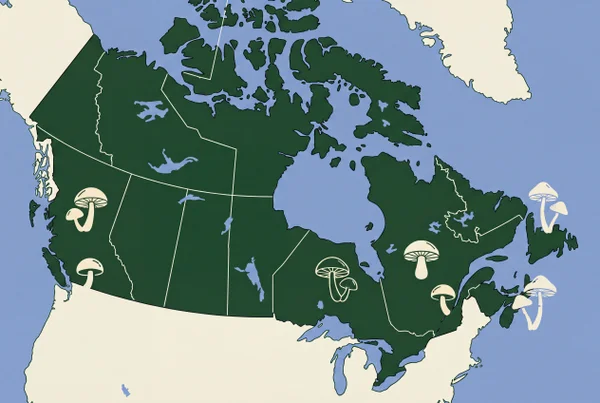
Canada is home to some of the world’s most diverse temperate rainforests, lush coastal zones, and fertile pasturelands, making it a prime natural biome for indigenous psychoactive fungi. In this comprehensive guide, you will learn how to identify native wild magic mushrooms in canada, understand their regional microclimates, and critically differentiate edible psilocybin species from lethal toxic look-alikes.
If you prefer guaranteed botanical purity, precise lab-standard microdoses, and zero foraging danger, browse our curated heysero Calm Microdose Capsules and artisan heysero Dark Magic Mushroom Chocolate Star Bar. You can also explore direct shipping services via Mushroom Delivery Canada.
Top Wild Psilocybe Species Native to Canada
While over a dozen psychoactive species occur naturally across Canadian provinces, three distinct varieties dominate the wild landscape:
1. Psilocybe semilanceata (Liberty Caps)
Found primarily across coastal British Columbia, Vancouver Island, and the maritime pastures of Nova Scotia and Newfoundland. Liberty caps feature distinct conical bell-shaped caps with a pronounced apical nipple (papilla). They fruit in autumn among rotting grass roots in sheep and cattle pastures, but never directly on dung.
2. Psilocybe cyanescens (Wavy Caps)
Abundant in the Pacific Northwest urban mulch beds, botanical gardens, and wood chip trails of Vancouver and Victoria. Recognizable by their wavy, undulating caramel-colored caps that bruise deeply blue when handled, Wavy Caps are among the most potent wood-decay fungi known to science.
3. Psilocybe baeocystis (Knobby Tops)
Thriving in coniferous forest duff, peat moss, and rotting wood debris across Western Canada. They feature dark olive-brown caps that hygrophanously lighten as they dry, yielding intense blue-black staining along the stem margins.
Crucial Wild Identification Safety: Lethal Look-Alikes
Foraging wild mushrooms requires extreme botanical discipline. Peer-reviewed mycological safety papers documented on Google Scholar mushroom toxicity studies caution that several common forest fungi contain fatal amatoxins and orellanine:
- Galerina marginata (Funeral Bell): Grows directly on rotting wood and features a brown spore print and fragile partial veil ring. Ingestion leads to severe liver and kidney necrosis.
- Cortinarius species (Webcaps): Grow in similar forest habitats with rusty reddish-brown spores and deadly delayed kidney toxins.
- Inocybe species: Small brownish pasture fungi that contain toxic concentrations of muscarine causing profuse sweating, respiratory failure, and cardiac arrest.
Safe Identification Checklist
| Diagnostic Feature | Authentic Wild Psilocybe | Toxic Look-Alike Warning |
|---|---|---|
| Spore Print Color | Dark purple-brown to deep purplish-black. | Rusty orange, pale brown, or pure white. |
| Bruising Reaction | Bluing reaction within 15–30 minutes upon bruising. | No blue staining; turns reddish, black, or remains static. |
| Pellicle Membrane | Gelatinous, separable pellicle when cap is moist. | Dry, flaky, or brittle cap surface with no elastic film. |
Why Standardized Formulations Offer Superior Safety
While wild foraging offers an exhilarating connection to nature, wild specimens exhibit unpredictable alkaloid fluctuations caused by weather and soil minerals. Selecting pharmaceutical-grade, lab-tested formulations guarantees consistent microdosing outcomes. Discover our complete line of organic wellness botanicals at heysero botanical dispensary.
Leave a Reply